Vintage Leather Bag Restoration & Reconstruction
Context
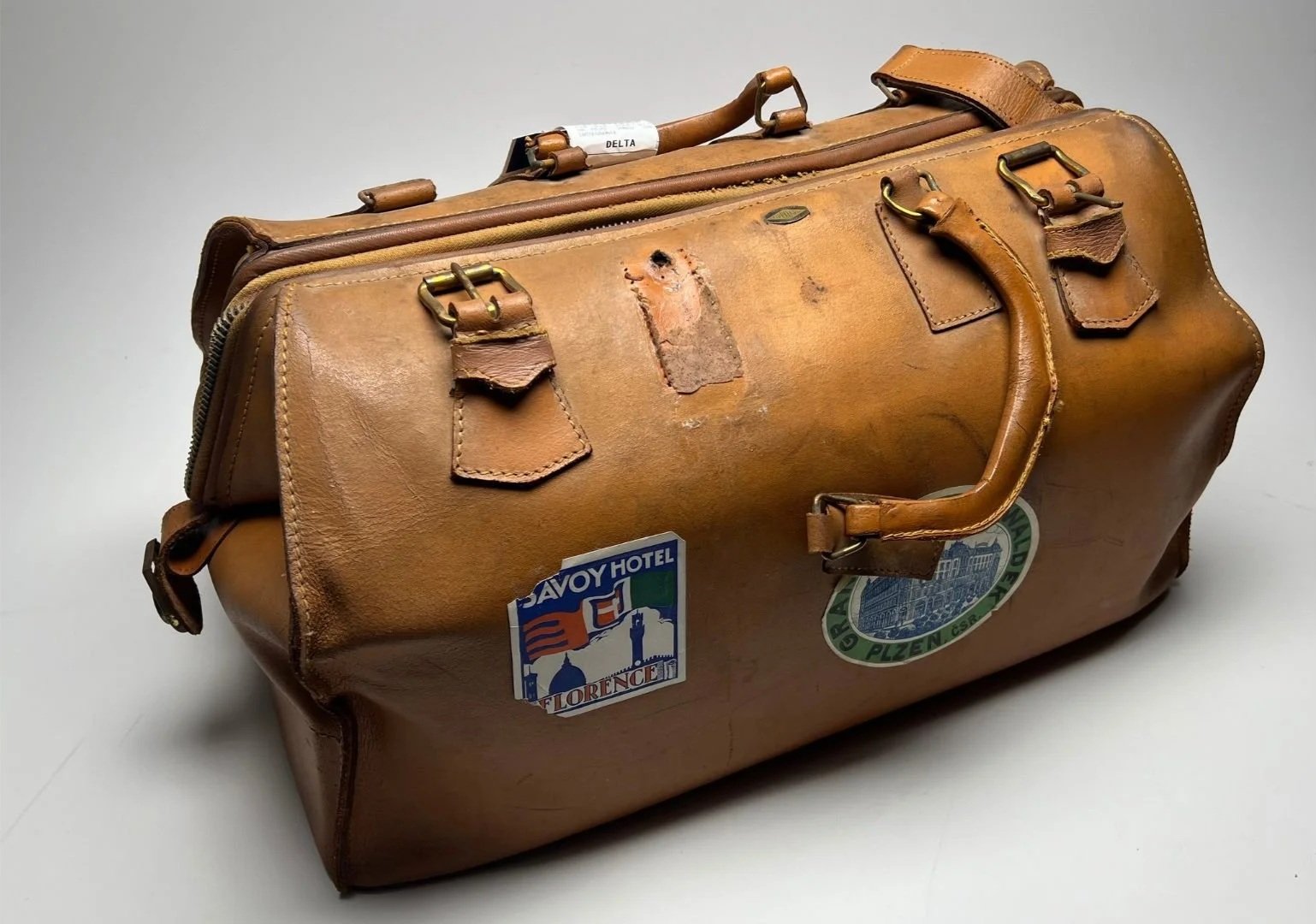
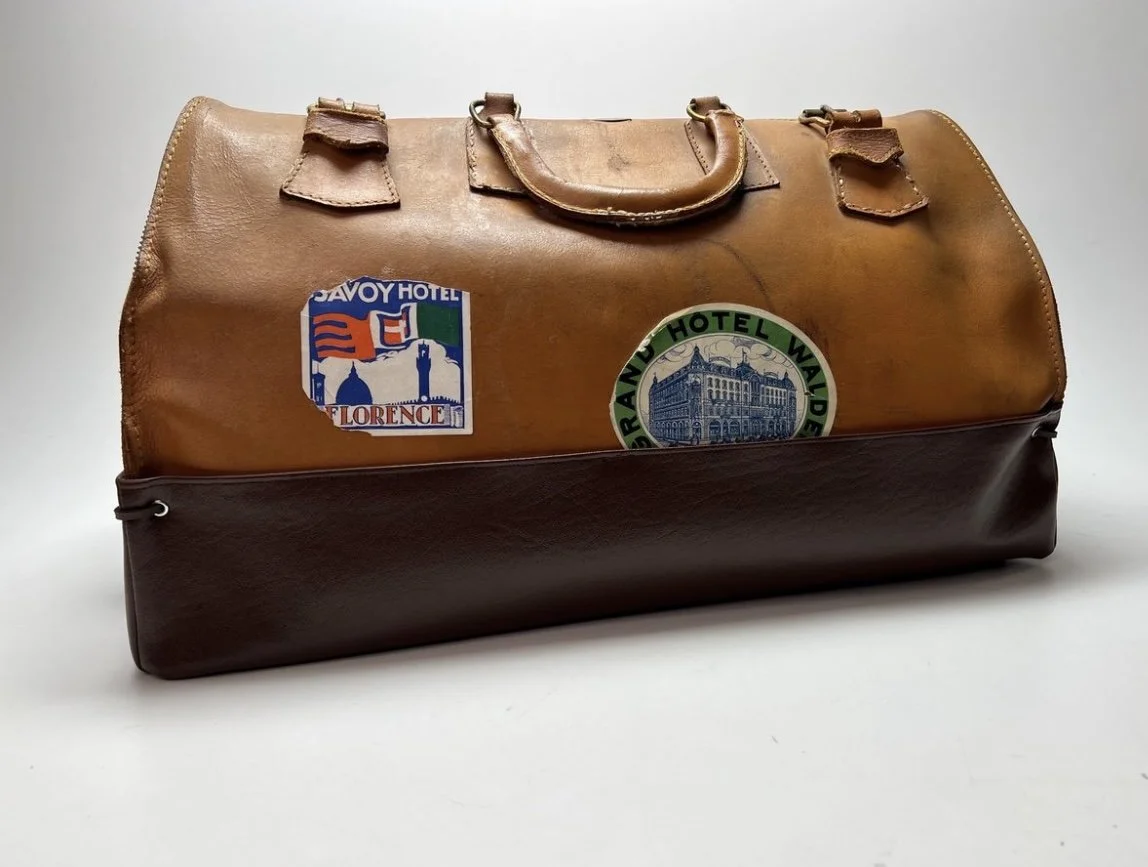
A heavily worn vintage doctor’s bag from the 1940s was sourced in deteriorated condition, with significant structural damage, particularly in the leather base and internal components. The goal for the client was to restore the bag for continued use while preserving its character.
Approach
Rather than redesigning the object, the intention focused on restoration, maintaining the key elements of the original design while improving durability and usability, extending the lifespan without compromising original structure or character.
Design Constraints
Preserve original form and visual identity
Repair structural damage ensuring replacements aligned with the bag’s original construction and appearance
Maintain functional usability for everyday use
Add a modern twist to the original appearance
Deconstruction & Pattern Development
The original bag was carefully disassembled to:
Analyze construction techniques
Identify failure points in materials and structure
Extract patterns for reconstruction
Using the original components as references, new patterns were developed to accurately replicate internal and external elements.
Restoration Strategy
The restoration focused on high-impact structural and material interventions commonly used in professional leather repair, such as:
Properly cleaning the leather
Replacing degraded components (base and lining)
Reinforcing stress points like handles and straps
Restoring structural integrity while maintaining original proportions

Reconstruction
The bag was rebuilt using newly sourced materials, aligned with the original design intent, to not only repair, but to modernize the bag.
Key updates included:
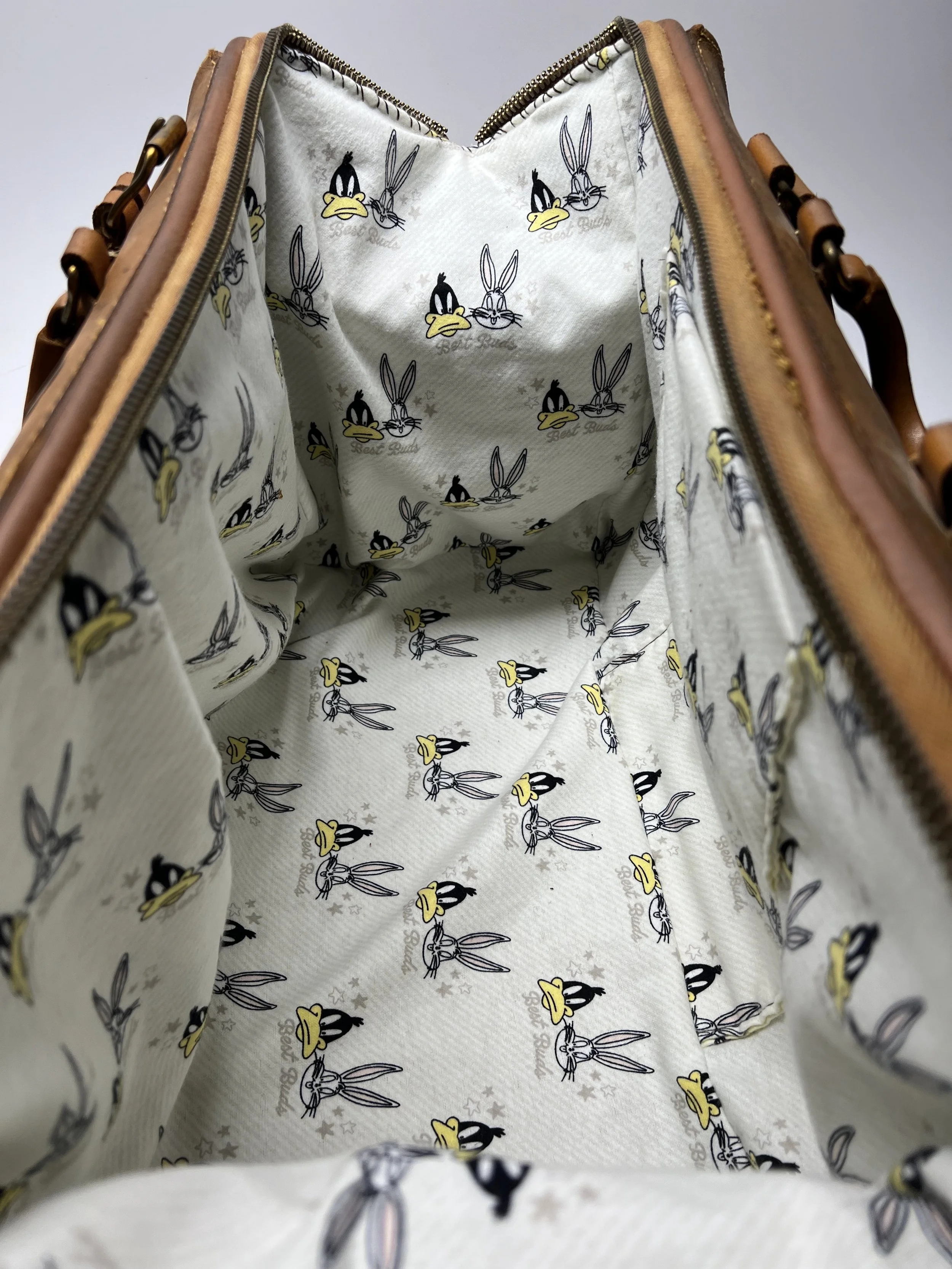
New internal lining constructed from original pattern references
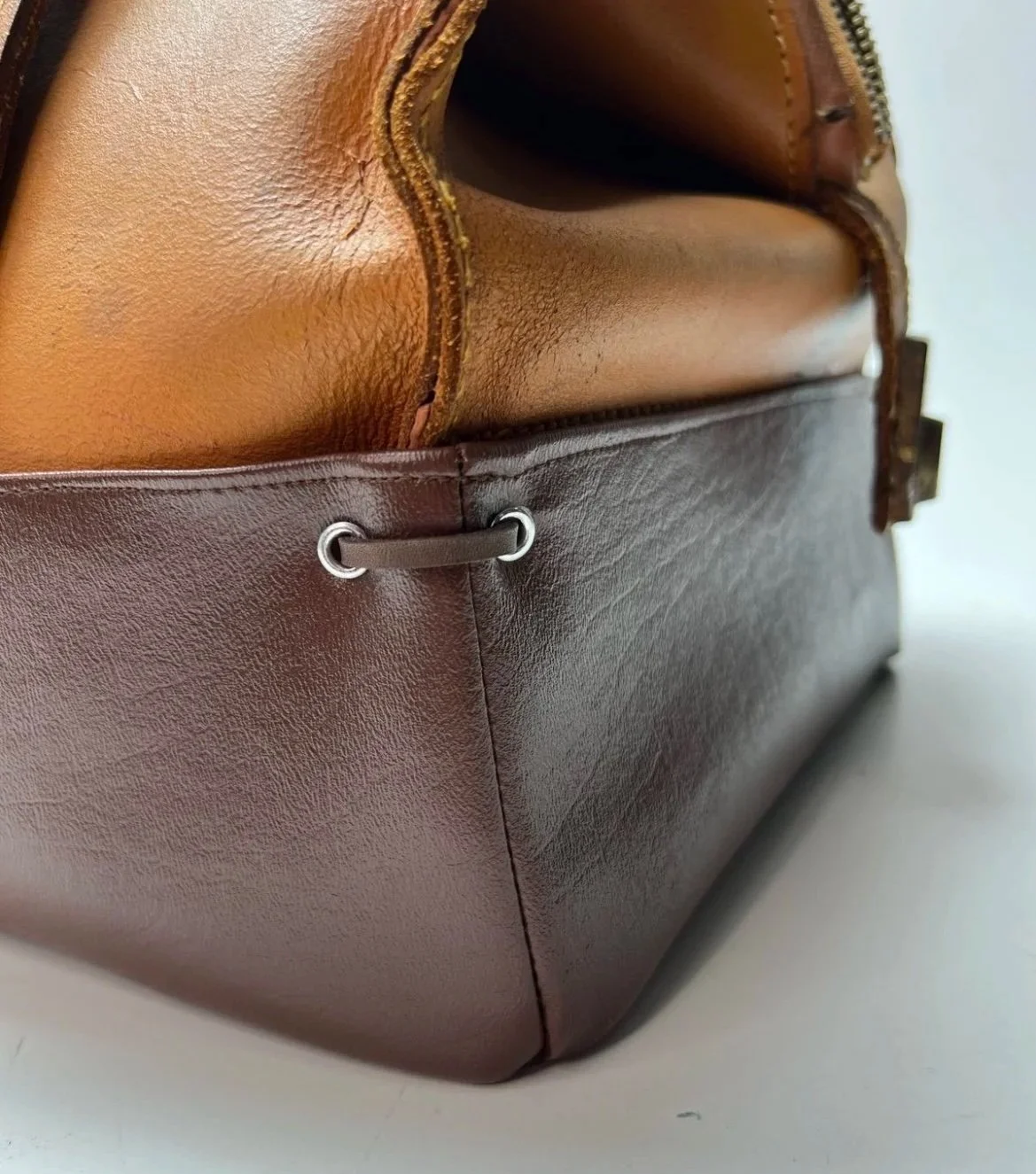
Rebuilt base structure to address severe wear
Updated hardware on the base for durability
Reinforced handles and straps for long-term use
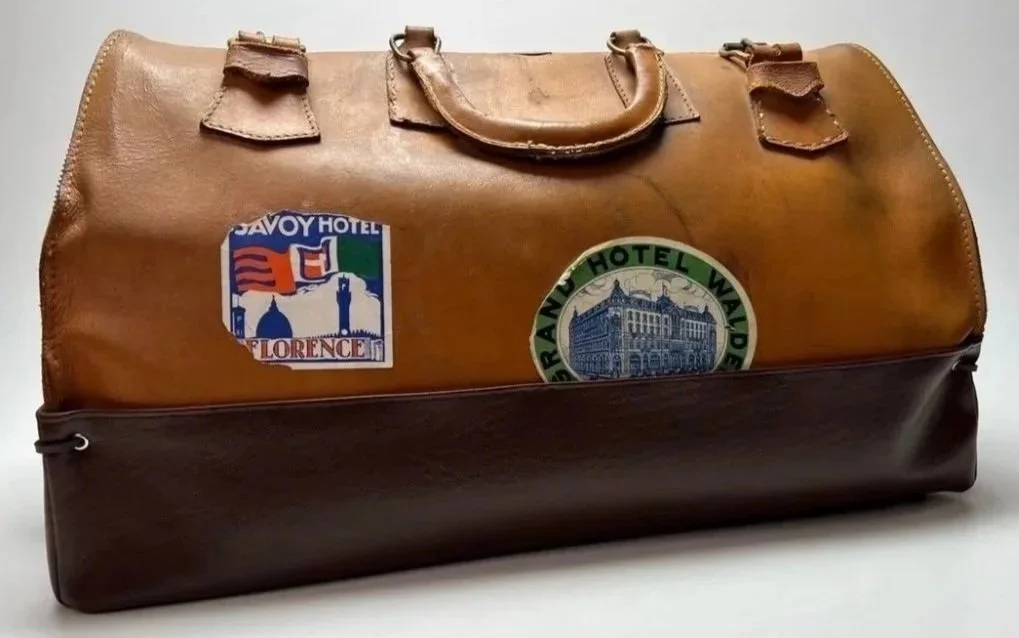
Final Outcome
The restored bag maintains part of its vintage character with a modern twist, while regaining full functionality. Structural integrity was significantly improved, enabling continued everyday use without compromising historical identity.